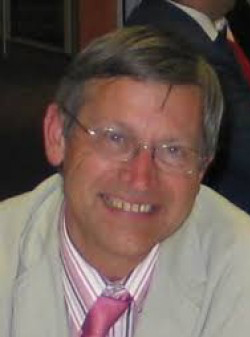
Presidium
The Presidium is one of the principal governing bodies of the European Academy of Sciences and is responsible for guiding the strategic direction of the Academy in accordance with its Statutes.
The Presidium is composed of the President, the Vice-President, the General Secretary, and up to five Active Members elected from among the Fellows of the Academy.
According to the Bylaws of EurASc, the President and Vice-President serve three-year mandates, while the elected Members of the Presidium serve four-year mandates.
For the current term, the mandates are as follows:
The President and Vice-President serve from 1 November 2025 to 31 October 2028, while the elected Presidium Members serve from 1 November 2025 to 31 October 2029.
The members of the current Presidium are listed below:
Prof. Dr. Rodrigo Martins
President
NOVA School of Science and Technology | Portugal
Prof. Rodrigo Martins is Full Professor in Materials Science at the NOVA School of Science and Technology (FCT-NOVA) and Coordinator of CENIMAT|i3N, a leading research centre in materials science and nanotechnology.
He has been a Member of the European Academy of Sciences since 2016 and currently serves as President of EurASc. Prof. Martins is also a Fellow of the Portuguese Academy of Engineering and has been recognised with several honours, including the Gold Medal of Merit and Distinction from the Municipality of Almada for his contributions to research and technological innovation.
Prof. Martins is internationally recognised for pioneering research in amorphous silicon semiconductors, transparent electronics, and paper electronics, fields in which his work has contributed significantly to the development of new electronic and energy technologies.
Throughout his career, he has published more than 700 scientific papers, with an impact factor exceeding 75 and more than 25,000 citations, reflecting the global influence of his research.
In addition to his academic work, Prof. Martins has played an active role in international scientific governance and innovation policy. He has served on advisory boards and strategic committees linked to European research programmes, advanced materials initiatives, and international materials research societies, contributing to the advancement of science and technology at the European and global levels.
Prof. Martins has been a Member of the European Academy of Sciences since 2016. He has served as President of EurASc since 2018, with successive terms of office reflecting the confidence of the Academy’s General Board. His first term as President ran from March 2018 to February 2020, followed by a second term from March 2020 to February 2022, which was subsequently extended until 2025 due to the COVID-19 pandemic. He was re-elected to serve a further term from November 2025 to October 2028.

Prof. Dr. Alain Tressaud
Vice-President
Centre National de la Recherche Scientifique | France
Prof. Alain Tressaud is an internationally recognised scientist in the field of inorganic chemistry and fluorine chemistry. He obtained his Doctorate in Physical Sciences from the University of Bordeaux in 1969 and began his international career as a NATO Fellow at the University of California, Berkeley, working with the renowned chemist Prof. Neil Bartlett, pioneer of noble-gas chemistry.
He served as Research Director at the French National Centre for Scientific Research (CNRS) and is now Research Director Emeritus. Throughout his career, he has held numerous visiting positions at leading international institutions, including the University of California, Berkeley; Kyoto University; Philipps-Universität Marburg; the National Physical Laboratory in New Delhi; and the Aichi Institute of Technology in Japan.
Prof. Tressaud has made major contributions to the chemistry and physics of fluorinated materials, magnetic fluorides, graphite intercalation compounds, and fluorine-based processes for advanced materials and energy technologies. His work has significantly influenced research in solid-state chemistry, materials science, and superconductivity.
He is the author of more than 360 scientific publications, 12 international patents, and editor of 12 books and book series volumes. His achievements have been recognised with several prestigious awards, including the Grand Prix CEA of the French Academy of Sciences, the ACS Award for Creative Work in Fluorine Chemistry, and the Henri Moissan International Award.
Prof. Tressaud has been a Member of the European Academy of Sciences since 2007, served as President of EurASc in 2017–2018, and currently serves his second mandate as Vice-President of the Academy.
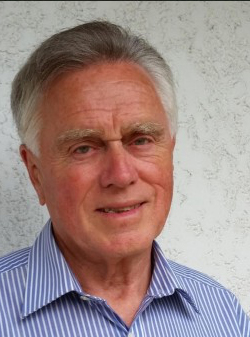
Prof. Dr. François Pichault
General Secretary
University of Liège | Belgium
Prof. François Pichault is Professor of Human Resource Management and Organizational Change at the HEC Liège Management School, University of Liège (Belgium). His research focuses on organizational transformation, human resource management, and the governance of institutions in complex and evolving environments.
Throughout his academic career, Prof. Pichault has contributed extensively to the study of organizational change, innovation in management practices, and the relationship between institutions and societal development. He has authored numerous scientific publications and has participated in several international research projects and academic networks.
He has been a Member of the European Academy of Sciences since 2007 and currently serves as General Secretary of the Academy, where he contributes to the coordination of its institutional activities and supports the governance and strategic development of EurASc.
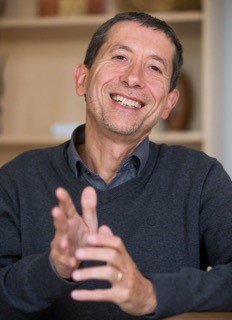
Prof. Dr. Natividad Carpintero-Santamaria
Member of the Presidium
Universidad Politécnica de Madrid | Spain
Prof. Natividad Carpintero-Santamaria is founder member of the Instituto de Fusión Nuclear “Guillermo Velarde” and Tenured Full Professor at the Polytechnic University of Madrid (UPM) (1987-2022). Department of Energy Engineering – Nuclear Engineering Area, where she has developed an internationally recognised academic career in the field of energy security and nuclear security.
Her research focuses on energy demand and security strategies towards a decarbonization of the energy model and global nuclear energy security regime, contributing to major international collaborations and developments in high level scientific infrastructures. Through her work, she has played an important role in advancing research in a multidisciplinary context of international dynamics at global, multicultural sphere. This internationality has given very positive results at scientific exchange level collaboration in cutting-edge research. She has represented the Spanish Government at the International Atomic Energy Agency (IAEA) and the OECD Nuclear Energy Agency (NEA).
Prof. Carpintero-Santamaria is a Member of the European Academy of Sciences (EurASc) and contributes to the scientific activities of the Academy in the field of energy security.
She has been a Member of the European Academy of Sciences since 2004 and currently serves her third mandate as a Member of the Presidium of EurASc for the term 1 November 2025 – 31 October 2029.

Prof. Dr. Richard Durst
Member of the Presidium
Cornell University | USA
Prof. Richard A. Durst is an internationally recognised scientist in the fields of analytical chemistry, biosensors, and bioanalytical instrumentation. He is Professor Emeritus at Cornell University (USA), where he developed a distinguished academic career dedicated to advancing analytical methodologies and sensor technologies.
His research has focused on the development of biosensors, electrochemical detection systems, and analytical devices for medical and environmental applications, contributing significantly to innovations in bioanalytical science and diagnostic technologies. Through his work, he has played an important role in bridging fundamental research with practical applications in health, biotechnology, and environmental monitoring.
Prof. Durst is a Member of the European Academy of Sciences since 2002 and has been actively involved in the scientific activities of the Academy, contributing to the advancement of interdisciplinary collaboration and international scientific cooperation.
He currently serves his third mandate as a Member of the Presidium of EurASc for the term 1 November 2025 – 31 October 2029.
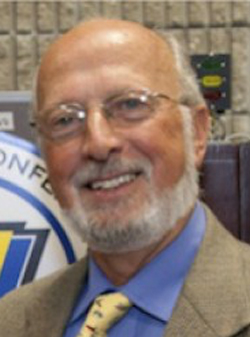
Prof. Dr. Armando J. L. Pombeiro
Member of the Presidium
University of Lisbon | Portugal
Prof. Armando J. L. Pombeiro is Professor of Chemistry at the Instituto Superior Técnico, University of Lisbon (Portugal) and an internationally recognised researcher in the field of coordination chemistry and catalysis.
His scientific work focuses on organometallic chemistry, catalytic processes, and the design of functional metal complexes, with applications in sustainable chemical transformations, green chemistry, and advanced materials. Through an extensive body of research, he has contributed significantly to the development of modern coordination chemistry and catalytic systems.
Prof. Pombeiro has authored a large number of scientific publications and has played an active role in international scientific collaboration and academic leadership. He is a Member of the European Academy of Sciences since 2019 and contributes to the Academy’s activities in the fields of chemistry and interdisciplinary scientific cooperation.
He currently serves as a Member of the Presidium of EurASc for the term 1 November 2025 – 31 October 2029.
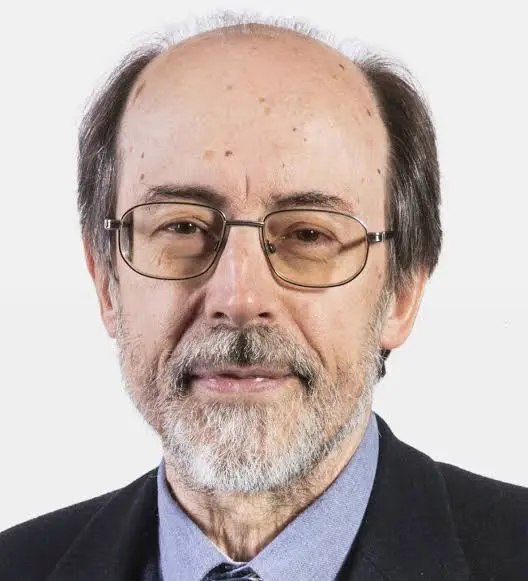
Prof. Dr. Evamarie Hey-Hawkins
Member of the Presidium
Leipzig University | Germany
Prof. Dr. Evamarie Hey-Hawkins is Professor of Inorganic Chemistry at Leipzig University (Germany) and an internationally recognised scientist in the fields of inorganic and organometallic chemistry.
Her research focuses on the chemistry of phosphorus-containing compounds, coordination chemistry, and functional inorganic materials, contributing to advances in catalysis, medicinal chemistry, and materials science. Through her extensive scientific work, she has made significant contributions to the development of modern inorganic chemistry and interdisciplinary research in molecular sciences.
Prof. Hey-Hawkins has authored numerous scientific publications and has been actively involved in international scientific organisations and collaborative research initiatives. She is a Member of the European Academy of Sciences since 2018 and contributes to the Academy’s scientific activities and institutional development.
She currently serves as a Member of the Presidium of EurASc for the term 1 November 2025 – 31 October 2029.

Prof. Dr. Paul Lecoq
Member of the Presidium
CERN | Switzerland
Prof. Paul Lecoq is an internationally recognised physicist specialising in particle physics instrumentation and advanced detector technologies. He has been a senior scientist at CERN (European Organization for Nuclear Research) and has contributed extensively to the development of high-performance detectors used in major international physics experiments.
His research focuses on scintillation materials, calorimetry, and detector systems for high-energy physics, as well as their applications in medical imaging and radiation detection. Through his work, he has played a significant role in advancing detector technologies used both in fundamental research and in applied scientific fields.
Prof. Lecoq is a Member of the European Academy of Sciences since 2011 and contributes to the Academy’s activities in the fields of physics and large-scale scientific infrastructures.
He currently serves as a Member of the Presidium of EurASc for the term 1 November 2025 – 31 October 2029.